


Resistors
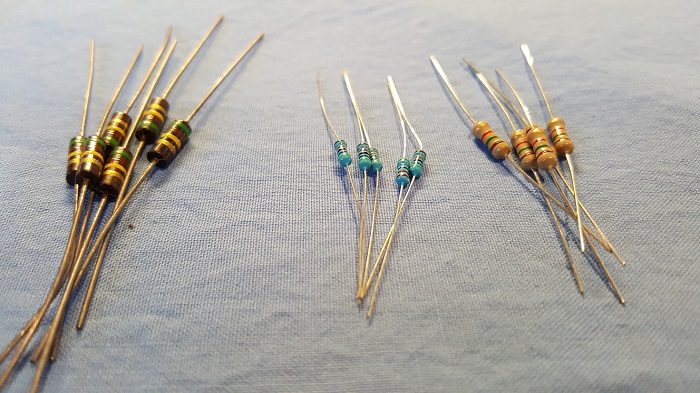
Types of Resistors in GT Rack Effects
There are several types of resistors. Usually only three types are used for effects: carbon comp, carbon film, and metal film. They all do the same thing and are interchangeable.
Does It Matter Which Type of Resistors Are Used in Rack Effects?
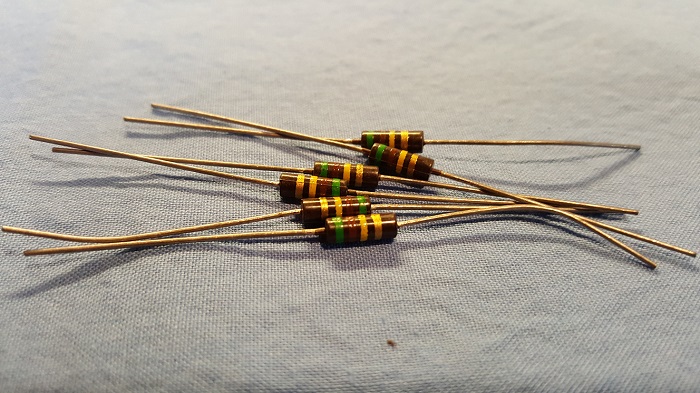
Carbon comp are an old type that has almost entirely been replaced by the other two types. They usually have +/- 10% tolerance on their values. They add a bit of "good" noise (matter of opinion) to effects. They were mostly used only in early effects, although some boutique builders are using them in new designs. We especially like them in fuzzes.
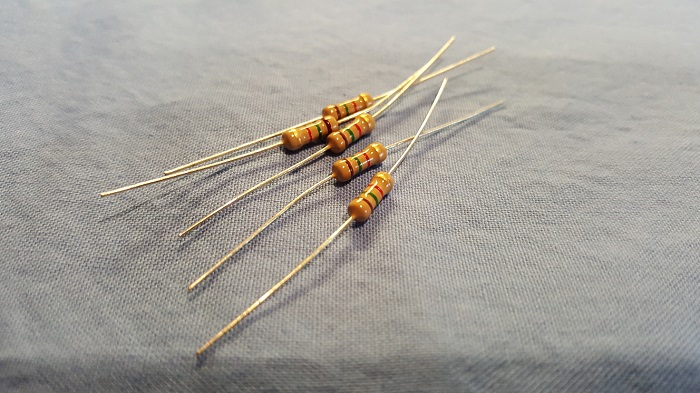
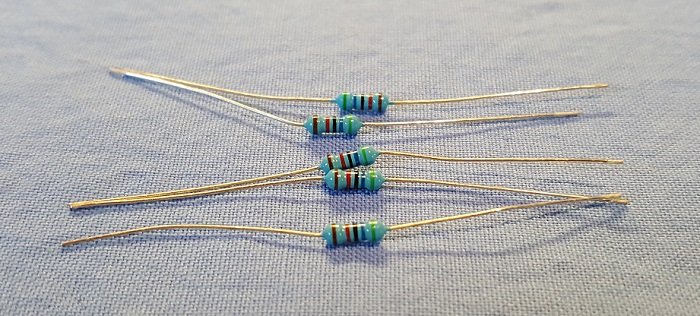
Carbon film and metal film are both much cleaner resistors, with metal film being the cleanest. They are both inexpensive and widely available. The most significant difference between them is that metal film resistors usually have tight tolerances of 1%, as compared to 5-10% for carbon film. Given all that, there is rarely any reason to use carbon film resistors. We use metal film by default in almost all circuits. Metal film is particularly good in high-gain effects where any extra noise will get amplified. Metal film is as quiet as it gets. It's very doubtful anyone could tell the difference between carbon film and metal film resistors, except maybe in high gain circuits.
While vintage effects often used carbon comp resistors, many of them sound better with metal film just due to the reduction of noise. But carbon comps can add some warmth and "mojo" to vintage circuits, particularly fuzzes. We haven't investigated this with an oscilloscope to see the actual difference between carbon comp and other resistor types, but have seem claims that carbon comps add even order harmonics that tend to sound good to many of us in fuzz, overdrive, and distortion effects.