


Capacitors
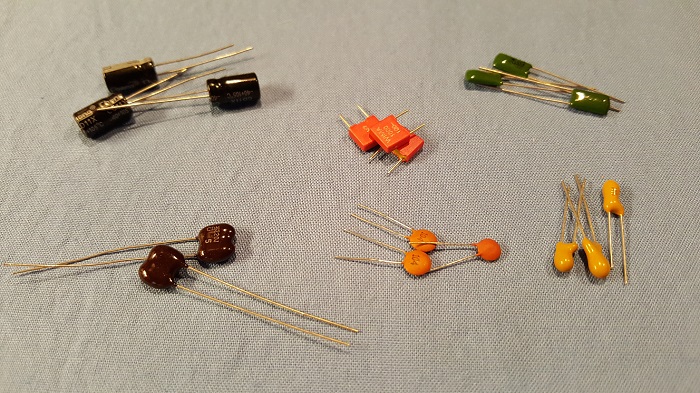
Capacitor Types
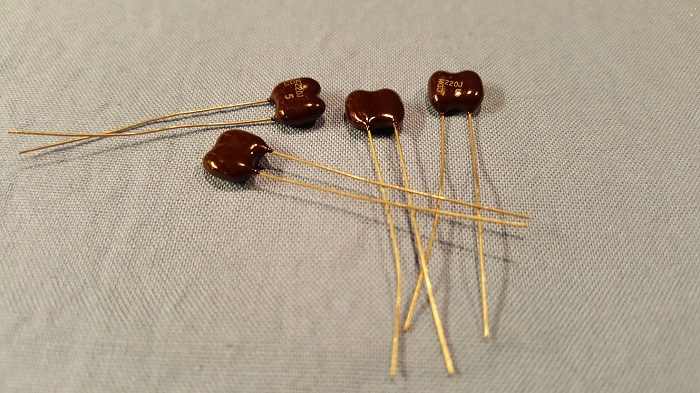
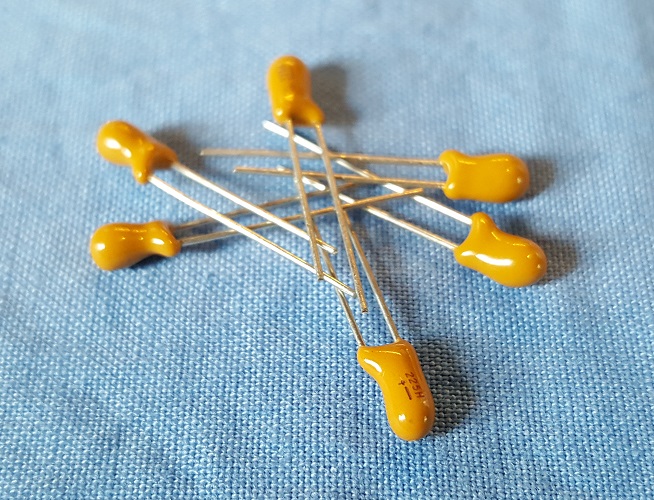
There are many types of capacitors, and great debates about the merits of each type and which sound best in what circuits. You may have heard of ceramic, silver-mica, electrolytic, and a variety of different film capacitors, among others. It is true that different types of capacitors tend to have different effects on the tone, but there is another property of the capacitors that has a bigger effect than the type of the capacitor. That is the size or value of the capacitor. We think this has a bigger effect on the tone than the type of the capacitor.
Capacitor Uses
Capacitors are used for multiple purposes in effects circuits. One of their main uses is to block and allow certain frequencies of sound to pass. This is generally referred to as "filtering". It often takes place in many parts of the circuit and is key to giving a circuit its sound. The frequencies that are blocked or allowed depend on the value of the capacitor. When you design an effect circuit, you calculate those capacitor values and specify those values to be used when you build the circuit.
Capacitor Values
But there's a catch. Capacitors do have a spec value, but it has a tolerance, or range of values that are considered OK for that capacitor value. For some capacitors, that tolerance can be +/- 20% or more, giving a very wide range of in-spec values that are different from the design value. "High quality" capacitors may still have tolerances of +/- 5-10%. That's still a pretty wide range for some purposes. When someone builds a circuit, they almost always use capacitors with the right spec value, but they don't test the actual value to see how close it is to the spec value. Or maybe they do that only for capacitors in particularly critical portions of the circuit. It would take far too long, and you may never even find a capacitor with the exact value you need. We often go through dozens of capacitors to find one "close enough" to the right value. That's a problem and can result in minor tone differences from one build to another.
This actual vs spec value problem is often related to the capacitor types. The tolerance for capacitor sizes is usually related more to the type of capacitor than it is to the brand or model of the capacitor. Electrolytic capacitors tend to have very wide tolerances of +/- 20% or more. Ceramic capacitors are also generally in the +/- 20% range. Film capacitors are usually in the +/- 5-10% range. When someone says they prefer a specific type of capacitor in a specific circuit, it may be because of the type of the capacitor or it may be because the specific effects of that type they played had capacitors closer or further from the spec value, or a bit of both.
Capacitors in GT Rack Effect Modules
To address this, we take a couple of actions. We do test and handpick some capacitors in parts of the circuit where it matters most. We also tend to use the same types of capacitors as were used in the circuits our modules compare to. In some cases, it is simply better to use a different type of capacitor, usually to get more accurate sizes. You can always request particular types of capacitors as a customization for your modules.
Capacitor Differences in Effects
As general guidelines, you can expect
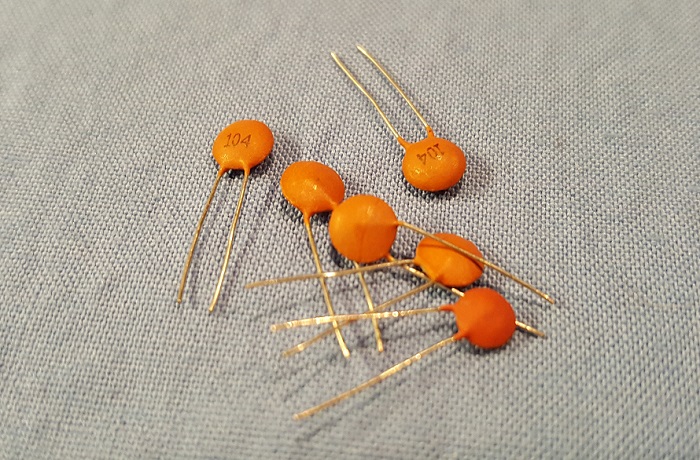
- ceramic capacitors add a bit of warmth
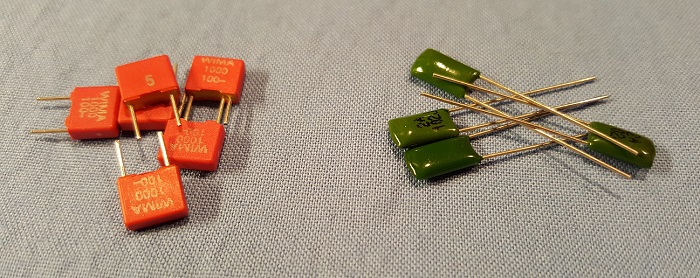
- film capacitors are generally more transparent
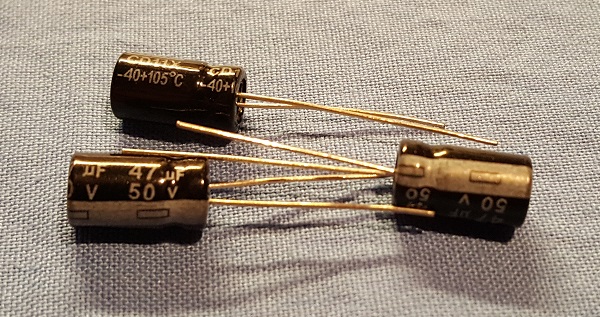
- electrolytic capacitors are often noisy
- silver-mica caps are generally very clean
- with film and silver-mica capacitors, we can usually find sizes very close to the spec value, with electrolytic and ceramic there may be more variation
- tantalum capacitors are also pretty clean and come in sizes that make them good substitutes for electrolytic capacitors in the audio path
- electrolytic capacitors can be very large and are great for use in power smoothing and filtering
- box film capacitors tend to have more accurate values than the older poly film caps such as "greenies"
Mostly you shouldn't expect to hear much difference due only to the type of capacitor, as long as they are sized correctly. You will most likely (if at all) hear a slight difference between "warm" ceramic caps, "noisy" electrolytics, and "quiet/transparent" everything else.
Another point about capacitors is that different types have different ranges of values. For example if you need a very small value, tantalum and electrolytics may not be available. You'll probably end up with ceramic or silver-mica. Depending on the size needed, the type selection may be limited.
Brands and models could matter, as they may have different specs besides size that impact how they affect the signal - different voltage ranges, distortion, etc. It's debatable whether those differences are audible.